
Choosing a swimming pool for your home is about much more than deciding where to put a body of water in the garden. With a wide variety of pool types, construction materials, shapes, sizes and water-treatment systems available, homeowners can select an option that suits their property, budget and lifestyle. The ideal pool should complement your outdoor space while providing the right balance between installation costs, maintenance requirements, durability and enjoyment.
Before making a decision, consider how much space is available, who will be using the pool, whether it will be used mainly for family recreation, entertaining, exercise or relaxation, and how much time and money you are prepared to spend on maintenance. For South African homeowners, the local climate, outdoor lifestyle and the long-term effect a pool may have on the appearance and appeal of a property are also important considerations.

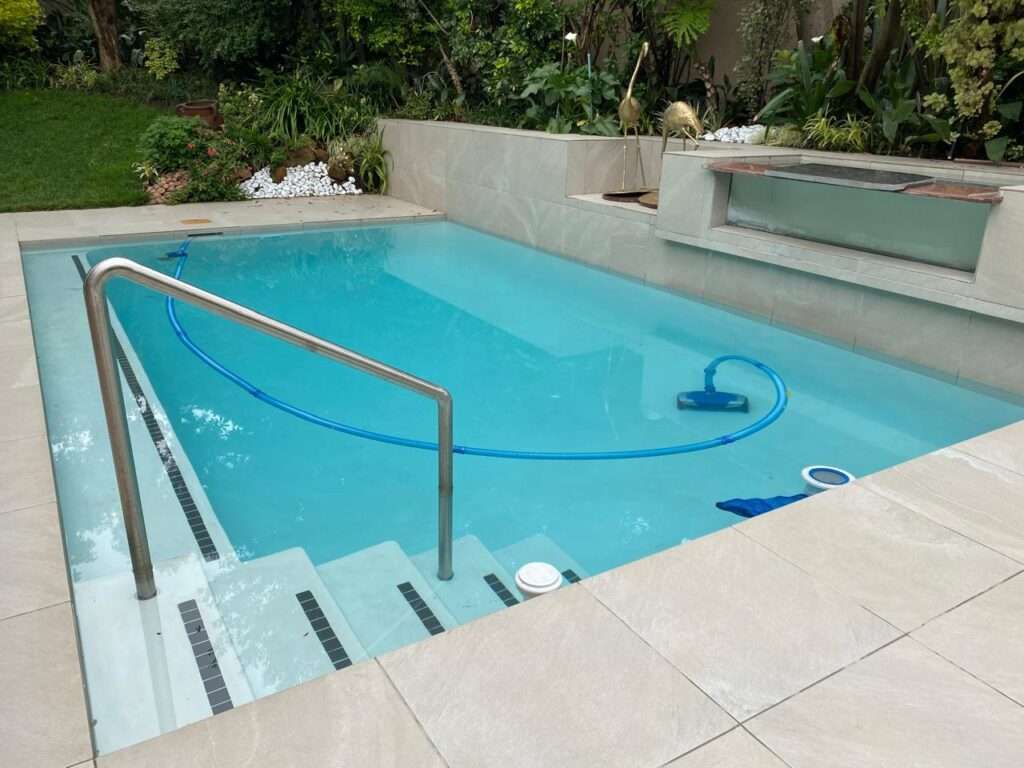
Choosing a Swimming Pool
In-Ground Swimming Pools
In-ground pools are a popular choice for homeowners looking for a permanent swimming pool that can become an integral part of the property’s landscaping. They can be designed in a wide variety of shapes, depths and sizes, although installation normally involves excavation, site preparation and professional construction.
Concrete pools, commonly constructed using gunite or shotcrete, offer exceptional design flexibility. Almost any shape, depth or size can be created, making concrete suitable for customised or architectural pool designs. Concrete pools are highly durable, but they generally involve higher installation costs and can require more ongoing maintenance than some other pool types.
Fibreglass pools are manufactured as pre-moulded shells in a factory and transported to the property, where they are installed into an excavated area. Their smooth, non-porous surface makes them relatively easy to clean and maintain, while installation can be considerably quicker than building a concrete pool from scratch. South African manufacturers and suppliers offer a range of shell shapes and sizes, making fibreglass a practical option for many residential properties.
Vinyl-liner pools consist of a supporting structure, which may incorporate metal, plastic or concrete components, covered by a custom-made vinyl liner. They can provide a more budget-conscious route into in-ground pool ownership and offer flexibility in shape and design. However, the vinyl liner is not permanent and will eventually need to be replaced, making replacement costs an important part of the long-term budget.
Above-Ground Swimming Pools
Above-ground pools can be an attractive alternative for homeowners who want a swimming pool without the cost and permanence of a conventional in-ground installation. Many are supplied as modular kits that can be assembled relatively quickly and require little or no major excavation.
Steel- or resin-framed pools are among the most accessible options. They can generally be installed on a suitably prepared surface and are available in different sizes to accommodate gardens of varying dimensions. Brands such as Intex South Africa offer above-ground pool options designed for residential use. These pools can be particularly suitable for families seeking an affordable recreational pool or homeowners who do not want to commit to a permanent in-ground structure.
Pools Designed Around a Lifestyle
Not every pool is designed only for conventional swimming. Specialised pool styles allow homeowners to tailor their pool to the way they intend to use it and to the character of their property.
Infinity pools are designed with one or more vanishing edges, creating the visual impression that the water extends towards the horizon. They are notably striking on properties overlooking the ocean, mountains, valleys or other scenic landscapes.
Lap pools are long and relatively narrow, making them ideal for fitness and continuous swimming. They are an excellent choice for homeowners who regard swimming as an important part of their exercise routine and have sufficient space for a dedicated swimming lane.
Plunge and cocktail pools provide a compact alternative where space is limited. Rather than being designed for extensive swimming, these smaller pools are intended for cooling off, relaxing, socialising or enjoying a refreshing dip. They can work well in smaller gardens, courtyards and urban properties.
Natural or eco pools take a different approach to water treatment. Depending on the design, aquatic plants, biological filtration and separate regeneration zones can be used as part of the water-cleaning process. These pools can appeal to environmentally conscious homeowners who want their swimming area to form part of a more natural landscape.
Swim spas combine features of a swimming pool and a spa. Powerful water jets create a current that allows the user to swim in place, making them an option for homeowners who want exercise, hydrotherapy or relaxation without requiring the space of a conventional swimming pool.

Choosing by Construction, Material and Purpose
Swimming pools can be classified in several different ways. The first is installation method: in-ground, above-ground or semi-inground. This affects excavation requirements, installation time, permanence and the way the pool integrates with the property.
The second major classification is construction material. Concrete, fibreglass and vinyl liner are the three principal choices for many in-ground residential pools, and each has different implications for installation cost, durability, appearance and maintenance.
The shape and purpose of the pool are equally important. Traditional rectangular pools, freeform designs, lap pools, plunge pools, infinity pools, architectural pools, cocktail pools and spools can all serve different needs. A family looking for a recreational swimming area will have different priorities from an athlete wanting a dedicated training pool or a homeowner wanting a compact entertainment feature.
The water-treatment system is another consideration. Conventional chlorine systems remain widely used, while saltwater systems, mineral systems and technologies incorporating ozone or ultraviolet treatment provide alternative approaches to water sanitation. Natural pools use biological processes and plants as part of their filtration system. The choice of water-treatment system can affect maintenance routines, operating costs and the overall swimming experience.
Consider Your Property and Lifestyle
The perfect pool for you is not necessarily the largest or most expensive one. Start by considering the physical characteristics of your property, like available space, access for construction equipment, ground conditions, existing landscaping and the position of the house. Sun exposure, prevailing weather conditions, privacy and proximity to trees should also be considered because they can affect water temperature, debris levels and ongoing maintenance. Think carefully about how the pool will actually be used.
A family with young children may prioritise safety, shallow areas and easy supervision, while a fitness enthusiast may prefer a lap pool or swim spa. If entertaining is the main purpose, a plunge or cocktail pool may provide the right combination of water, seating and outdoor living space without taking up the entire garden.
Your long-term budget should include more than the initial installation price. Allow for filtration equipment, pumps, heating if required, water treatment, cleaning, repairs, electricity, water usage and potential replacement components. Pool covers, safety features and energy-efficient equipment can also form part of the overall investment. Making the right choice – take time to compare the full cost and practical requirements of each option before committing.