A pool does not have to be empty to be water-wise. In fact, one of the best times to prepare your pool for possible water restrictions is before restrictions are introduced. Checking for leaks, reducing evaporation and keeping the filtration system working properly can all help reduce unnecessary water use.
Cape Town is a water-scarce region, and although water restrictions have not been in effect since November 2020, the City continues to encourage responsible water use. Its latest 2026 Water Outlook says there is no immediate risk to supply, but the risk of future restrictions has increased compared with previous years.
Preparing your pool in advance can also make maintenance easier if water-use rules change. Here are some practical areas to look at before restrictions become a concern.

Check Your Pool for Leaks
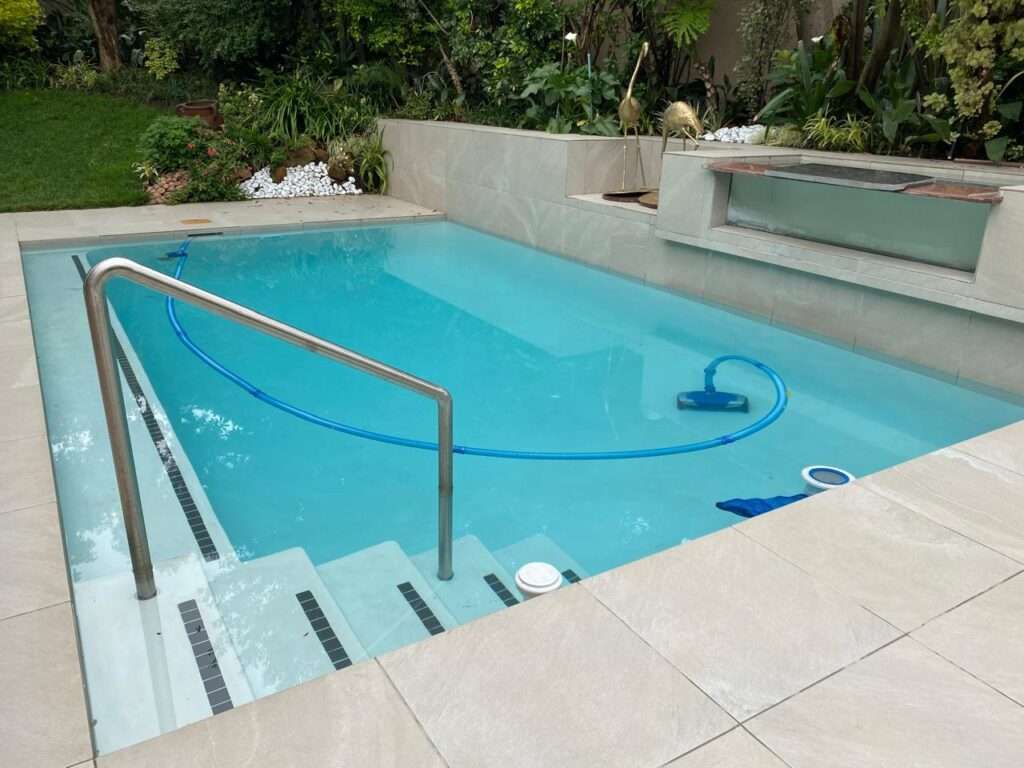
A pool naturally loses some water through evaporation and normal use, but unexplained water loss should always be investigated. Leaks can occur in the pool structure, plumbing, fittings, pump system or filtration equipment. Some may be easy to spot, while leaks in underground pipework can be more difficult to identify. The City of Cape Town recommends checking pools, pool piping and pump systems for leaks as part of its water-wise pool guidance.
Why deal with leaks early? A small leak can mean regular top-ups, which becomes particularly important when water use is restricted. Finding and repairing the source before restrictions are introduced can help prevent ongoing water loss and avoid a more urgent repair later.
Reduce Pool Evaporation
Evaporation is a normal part of owning an outdoor pool, particularly during hot, dry and windy conditions. It cannot be eliminated, but it can be reduced. One of the simplest measures is a suitable pool cover. The City recommends pool covers to reduce evaporation and its restriction guidance specifies a solid, non-permeable cover where one is required. A cover should be used when appropriate and refitted after the pool has been used. Landscaping or wind barriers can also help reduce wind-driven evaporation.

Keep Your Pool Pump and Filtration System Working Efficiently
Your pump and filtration system are central to maintaining pool water quality. A system that is not operating properly can affect circulation and filtration and may make the pool harder to maintain. Regular swimming pool maintenance can identify problems before they become equipment failures.
Limit Unnecessary Backwashing
Backwashing is an important maintenance process for certain pool filtration systems, but it uses water. It should therefore be carried out when the filter requires it rather than simply as a routine activity without checking the filter’s condition.
Cape Town’s water-wise pool guidance recommends backwashing only when necessary and also recommends recycling backwash water where possible. A properly maintained filtration system can also make it easier to manage the pool without unnecessary water use.
Can pool backwash water be reused? Potentially, yes, but the appropriate reuse method depends on the water quality, treatment system and intended application. Any recycling system should be designed and operated appropriately rather than simply redirecting untreated pool water wherever it is needed.
Avoid unnecessary draining
Draining and refilling a pool uses a significant amount of water. Routine maintenance should therefore focus on keeping the existing water in suitable condition rather than treating draining as a normal part of pool care. If water quality becomes difficult to manage, the underlying cause should be investigated. Problems with filtration, circulation, leaks or water treatment may need to be addressed first.
Consider Alternative Water Sources
Alternative water sources can reduce reliance on municipal drinking water, but they need to be used safely and in accordance with local requirements. Cape Town identifies rainwater, groundwater, greywater and other alternative sources as potential options for certain applications. The City specifically states that harvested rainwater can be used to top up a pool. Boreholes and wellpoints also have regulatory requirements. In Cape Town, boreholes and wellpoints need to be registered, and users must comply with applicable requirements around their use.


Check the water before using it
Alternative water is not automatically suitable for swimming pools. Its quality and composition need to be considered before it is introduced into the pool because unsuitable water can affect water chemistry, equipment and the pool surface. The City also notes that alternative water systems need to be properly managed because they can present health and environmental risks.
Prepare Your Pool Before Restrictions Arrive
Water restrictions are easier to manage when your pool is already operating efficiently. Checking for leaks, reducing evaporation, maintaining pumps and filtration, limiting unnecessary backwashing and investigating suitable water sources can all form part of a sensible preparation plan.
Cape Town’s current water situation may change, and restrictions can be introduced at different levels with different requirements. Always check the latest information from your local municipality before changing how you fill, top up or maintain your pool.
Waterscapes provides pool maintenance, repairs, waterproofing, pumps and filtration services in Cape Town and Gauteng, helping property owners keep their pool systems functioning properly and identify problems before they become larger issues.