Digital marketing is about getting your business in front of the right people online. It can help you attract new customers, generate enquiries, build brand awareness and keep your existing customers engaged.
But digital marketing is not just about posting on Facebook or paying for Google Ads. There are several ways to promote your business online, and each serves a different purpose. Some help people find you when they search for your services, while others put your brand in front of people who may not know you exist yet.
So, where do you start? Let’s look at the different digital marketing methods available and how you can use them to promote your business.

1. Search Engine Optimisation (SEO)
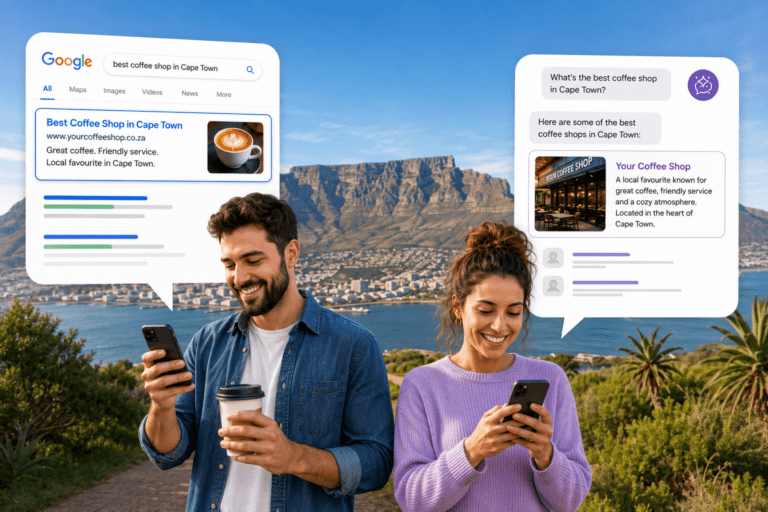
SEO is the process of improving your website so that it appears in organic (unpaid) search results on Google and other search engines. For example, if you run a plumbing business in Cape Town, you want your website to appear when someone searches for “plumber in Cape Town” or “geyser repairs near me”.
SEO services involve keyword research, website content, page titles, meta descriptions, technical improvements and links from other websites. It also includes making sure your website works well and is easy for visitors to navigate. Search Engine Optimization takes time and ongoing work, but it can generate website traffic without paying for every click.
2. Google Ads and Paid Search Advertising
SEO helps you earn your place in search results. Google Ads allows you to pay for visibility. Your adverts can appear when someone searches for specific products or services. For example, a travel agency could advertise for searches such as “Mauritius holiday packages” or “safari tours in South Africa”.
Google Ads services offers Display Ads, YouTube Ads and Performance Max campaigns, which can reach people across different Google advertising channels. You control your advertising budget and can track clicks, enquiries and other actions. With pay-per-click advertising, you generally pay when someone clicks on your advert.
3. Social Media Marketing
Social media marketing involves using platforms such as Facebook, Instagram, LinkedIn, TikTok and Pinterest to promote your business. There are two ways to approach it.
Organic social media
Organic marketing means publishing content without paying to promote it. This includes sharing company news, photographs, videos, tips, customer feedback and information about your services. It helps keep your business active on social media and gives people a reason to follow and engage with you. However, your posts will not necessarily reach all your followers. Platforms use algorithms to determine what appears in people’s feeds.
Paid social media advertising
Paid social media allows you to reach audiences beyond your existing followers. You can create campaigns on platforms such as Facebook, Instagram and LinkedIn, targeting people based on factors such as location, interests and professional details. You can use these adverts to generate leads, promote products, drive website traffic or increase brand awareness. The two approaches work well together. Organic content keeps your profiles active, while paid advertising helps extend your reach.
4. Guest Posts and Content Partnerships
Guest posting involves writing articles for other websites that are relevant to your industry or audience. For example, a wedding photographer could contribute an article to a wedding planning website, while an accountant could write about bookkeeping for a small business publication.
This introduces your business to people who may not have come across your website before. It can also create opportunities to earn relevant backlinks, which are links from other websites pointing to yours. The focus should be on publishing useful content on relevant websites, not simply collecting links. Google considers paid or arranged links intended to manipulate search rankings a form of link spam.
5. Online Press Releases
A press release is an announcement about something happening in your business that may be of interest to the media or the public. You could issue one when launching a new product, opening a branch, announcing a partnership or reaching a business milestone.
Press releases can be distributed to media outlets and online publications. If a publication picks up your story, it may generate additional exposure, website visits and brand mentions. Paying for a press release to appear on a distribution website does not guarantee editorial coverage, so the news itself needs to give people a reason to read it.
6. Content Marketing and Blogging
Content marketing involves creating and sharing information that answers questions your potential customers may have. This can include blog articles, guides, tutorials, case studies and frequently asked questions. For example, a financial services company could publish articles about tax, budgeting and bookkeeping. A travel agency could write about destinations, travel requirements and holiday planning.
Blogging also supports SEO by creating more opportunities for your website to appear in relevant searches. And here’s a bonus. One blog article can become several social media posts, an email newsletter or even a video. You do not have to reinvent the wheel every time you need content.
7. Email Marketing
Email marketing allows you to communicate directly with people who have given permission to receive your marketing emails. You can use newsletters to share company updates, promotions, new products, useful information and industry news.
Email marketing is also useful for following up with potential customers who are not yet ready to make a purchase. Automated emails can welcome new subscribers, share information or remind customers about your services. Unlike social media, your communication does not depend on an algorithm deciding who sees your post.
8. Remarketing and Retargeting
Have you ever visited a website, looked at a product and then noticed adverts for that same product appearing on Facebook or other websites? That’s remarketing.
It allows businesses to show adverts to people who have previously visited their website or interacted with their online content. For example, someone who viewed a particular holiday package could later see an advert promoting that package. Remarketing is useful because people do not always enquire or buy during their first visit. It gives your business another opportunity to reach them.
9. Google Business Profile and Local SEO
If your business serves a particular area, your Google Business Profile is worth paying attention to. This is the listing that appears in Google Search and Google Maps, showing information such as your address, contact details, operating hours, website and customer reviews.
Keeping your profile up to date helps people find and contact your business. Local SEO also involves optimising your website for location-based searches, such as “dentist in Durbanville” or “accountant in Pretoria”.
10. Influencer Marketing and Brand Collaborations
Influencer marketing involves partnering with content creators, bloggers or social media personalities who have an audience that matches your target market. For example, a travel company could work with a travel content creator to showcase a destination, while a beauty salon could collaborate with a local content creator.
You can also collaborate with other businesses that offer complementary services. This could involve joint promotions, interviews or sharing content with each other’s audiences. Any paid or sponsored influencer content should be clearly disclosed to the audience.
11. Video Marketing
Video marketing involves using video to introduce your business, explain your services, demonstrate products or answer customer questions. You can publish videos on YouTube, Facebook, Instagram, TikTok and LinkedIn.
You do not need expensive equipment to get started. Short videos filmed on a smartphone can be used to share tips, show behind-the-scenes activities or introduce the people behind your business. YouTube videos can also appear in Google search results, giving your content another opportunity to be found.
How Do You Choose the Right Digital Marketing Strategy?
You do not need to use every digital marketing method available. The right combination depends on your business, target audience, budget and goals.
For example, a local service provider like Daleen Prinsloo Digital & Design might focus on SEO, Google Ads and Google Business Profile optimisation. An online shop could combine Google Shopping, social media advertising, email marketing and remarketing. A B2B company might benefit from LinkedIn, SEO, guest articles and email marketing.
The important thing is to understand what each channel can do and how they can support one another. A blog article can support your SEO, provide content for social media and give you something useful to share in your newsletter.
Ready to Get Your Business Seen Online?
Digital marketing is not a once-off exercise. It takes planning, monitoring and ongoing work to understand what brings results. Start by identifying your goals, choosing the channels that make sense for your business and tracking the results. You do not have to be everywhere. You just need to be where your potential customers are.
Need help putting your digital marketing strategy together?
Get in touch with digital marketing experts to discuss how SEO, paid advertising, social media and content marketing can work together to promote your business.